If you’re missing most or all of your teeth and tired of dealing with loose dentures, All-on-4 dental implants offer a permanent solution that restores both function and confidence. But before you move forward, you probably want to know: what’s this going to cost?
The short answer? All-on-4 implants typically range from $15,000 to $30,000 per arch, depending on materials, your specific needs, and the expertise of your periodontist. That’s a significant investment. But when you compare it to a lifetime of denture replacements, adhesives, and bone loss, many patients find the value speaks for itself.
At Dallas Periodontal Associates, our team helps Dallas-area patients understand exactly what goes into All-on-4 pricing, how it compares to other options, and what to expect from the treatment process. Let’s break it all down.
What Are All-on-4 Dental Implants?
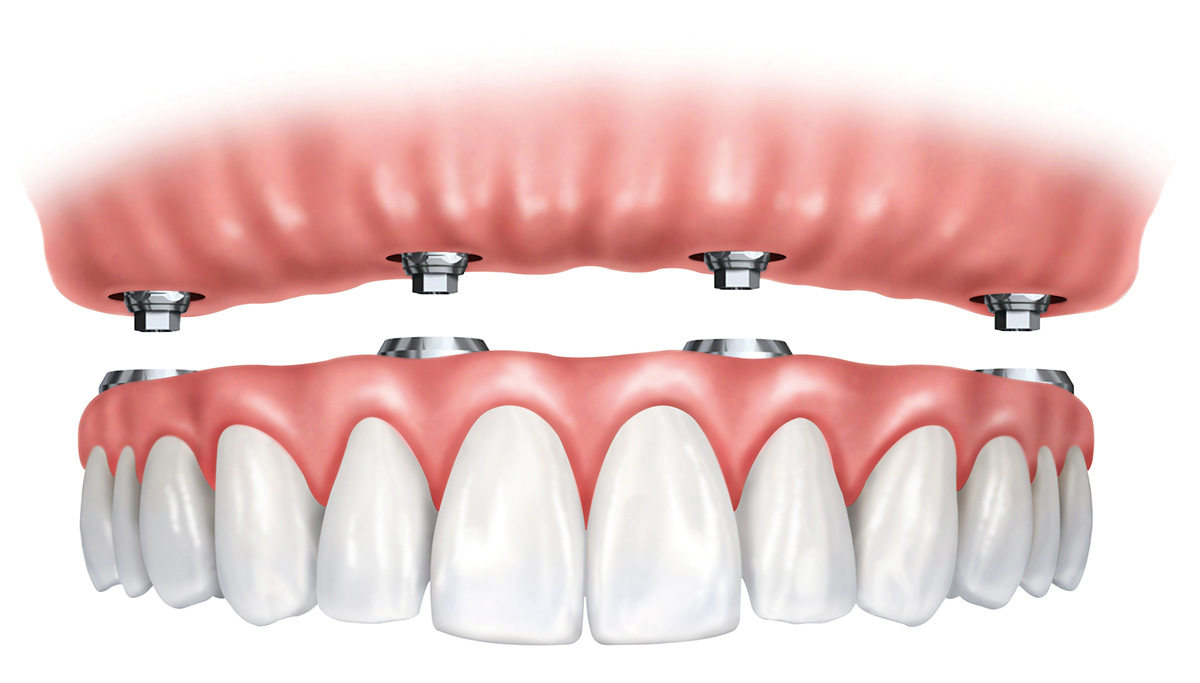
All-on-4 dental implants are a full-arch tooth replacement technique that uses four strategically placed titanium implants to support a complete set of fixed, non-removable teeth. Unlike dentures, these prostheses are screwed directly into the implants and function much like natural teeth. The name says it all: all teeth, on four implants.
Traditional dental implant approaches often require six to eight implants per arch, and many patients need bone grafting before those implants can even be placed. All-on-4 was developed specifically to work around those limitations. By angling the two rear implants at 30 to 45 degrees, the technique takes advantage of denser bone in the front of the jaw. That means most patients qualify without any grafting at all.
The concept was pioneered by Dr. Paulo Maló in the late 1990s and has since been supported by over 20 years of clinical data, including studies showing implant survival rates above 95% at 10 years (Maló et al., Clinical Implant Dentistry and Related Research, 2011). It’s become one of the most widely used protocols for patients who need a full arch of teeth replaced.
What makes All-on-4 different from dentures? Dentures sit on top of your gums and rely on suction or adhesive to stay in place. All-on-4 prostheses are screwed directly into the implants, so they function much more like natural teeth. You don’t remove them at night. You don’t use adhesive. You brush them in your mouth just like you would your own teeth.
For patients dealing with failing teeth, painful periodontal disease, or dentures that no longer fit well, All-on-4 offers a way to rebuild with a stable, permanent set of teeth, often in a single surgical appointment. At Dallas Periodontal Associates, Dr. Tanur and Dr. Ovadia, who are diplomates of the american board of periodontology, a status earned by only 10% of periodontists, have extensive experience with this protocol. The combination of fewer implants, no grafting requirement for most patients, and same-day provisional teeth makes this one of the most efficient full-arch solutions available today.
How the All-on-4 Procedure Works: Step by Step
The All-on-4 procedure involves five key stages: diagnostic imaging, extraction, implant placement, same-day temporary teeth, and final prosthesis delivery. Understanding what’s involved in each stage helps explain why the investment makes sense for so many patients.
The Initial Evaluation
Your treatment begins with a full examination. Your periodontist uses CBCT (Cone Beam CT) technology to create detailed 3D images of your jaw. This imaging reveals bone density, nerve locations, and sinus positions, all critical for planning precise implant placement.
This diagnostic phase isn’t just about taking pictures. It’s about creating a surgical plan that maximizes your chances of success while minimizing complications. A periodontist with advanced implant training will use this data to map out exact implant positions before you ever sit in the surgical chair.
Removing Failing Teeth
If you still have remaining teeth that can’t be saved, they’ll be removed on the day of your implant surgery. This keeps the process efficient and means you won’t need multiple procedures spread over months. Your periodontist uses gentle tooth extraction techniques to make this step as comfortable as possible.
Placing the Implants
This is where it all comes together. Your periodontist places four titanium implants per arch under sedation. The two front implants go in vertically, while the two back implants are angled at 30 to 45 degrees.
Why the angle? It allows the implants to anchor into denser bone toward the front of your jaw, avoiding areas where bone loss is most common. This strategic placement is what makes All-on-4 possible for patients who might not have enough bone for traditional implants.
Same-Day Temporary Teeth
You won’t leave the office without teeth. A temporary fixed prosthesis attaches to your new implants that same day. These provisional teeth let you smile, speak, and eat soft foods while your implants integrate with your jawbone. For most patients, this is the moment that changes everything. You walk in with failing teeth or uncomfortable dentures and walk out with a full, stable smile.
Your Permanent Prosthesis
After three to six months of healing, your temporary teeth are replaced with your permanent prosthesis. During this integration period, your titanium implants fuse with the surrounding bone through a process called osseointegration. This biological bond is what gives All-on-4 its long-term stability. Your final restoration is custom-crafted to match your facial features and desired smile aesthetics, and your periodontist will verify the fit, bite, and appearance before final placement.
Key Benefits of All-on-4 Implants Over Traditional Options
All-on-4 offers five major advantages over other full-arch replacement options:
- No bone grafting in most cases
- Permanently fixed teeth
- Preserved jawbone structure
- Same-day results
- Decades of durability
Here’s why each matters.
No Bone Grafting Needed for Most Patients
Traditional implants often require bone grafting if you’ve experienced bone loss, a common issue for long-term denture wearers. All-on-4’s angled implant design bypasses areas of bone loss, which means most patients can proceed without the added cost, healing time, and complexity of grafting procedures.
Fixed Teeth That Stay Put
Unlike removable dentures, All-on-4 prostheses are permanently attached to your implants. No adhesives. No slipping during meals. No embarrassing moments when you laugh or sneeze.
Because the prosthesis is fixed in place, it feels and functions much closer to natural teeth than any removable option. That stability changes how you eat, how you talk, and how confident you feel in social situations.
Jawbone Protection and Facial Structure
When teeth are missing, your jawbone begins to deteriorate. This leads to the sunken facial appearance many denture wearers develop over time. Dental implants stimulate the bone just like natural tooth roots, preventing this collapse and maintaining your facial contours. This bone-preserving benefit is one of the most important long-term advantages of choosing implants over dentures.
Can You Really Get New Teeth in One Day?
The “new teeth in one day” concept is real. You genuinely leave the office with functional teeth on the same day as your surgery. For patients who’ve been struggling with failing teeth or uncomfortable dentures, walking out with a full set of stable teeth is often what matters most to them.
Long-Term Durability
With proper care, regular professional cleanings, and good implant aftercare habits, many patients enjoy their All-on-4 for 15 to 20 years or longer, based on published long-term follow-up data. The implants themselves often last a lifetime. It’s typically the prosthesis that may eventually need replacement after significant wear.
All-on-4 vs. Dentures vs. Individual Implants: Cost Comparison
Let’s put All-on-4 pricing in context by comparing it to other full-arch replacement options:
| Treatment Option | Cost Per Arch | Pros | Cons |
|---|---|---|---|
| Traditional Dentures | $1,000–$3,000 | Lowest upfront cost, no surgery required | Requires adhesives, accelerates bone loss, needs replacement every 5-7 years |
| Implant-Supported Dentures (Snap-On) | $8,000–$15,000 | More stable than traditional dentures, removable for cleaning | Still removable, requires 2-4 implants, prosthesis needs replacement |
| Individual Implants (6-8 per arch) | $30,000–$60,000+ | Each tooth replaced individually | Highest cost, may require bone grafting, longer treatment timeline |
| All-on-4 | $15,000–$30,000 | Fixed, permanent, same-day teeth, no grafting in most cases | Higher upfront cost than dentures, requires surgery |
At Dallas Periodontal Associates, our team can help you determine which option fits your needs and budget based on your specific oral health situation.
The Hidden Costs of Dentures
That $1,000 to $3,000 price tag for traditional dentures looks appealing until you factor in the ongoing expenses. Denture adhesives, professional relining every few years, and complete replacement every five to seven years add up quickly.
Over a decade, denture maintenance costs (adhesives, relinings, replacements) can add up significantly and sometimes approach the upfront cost of implants. When you add the intangible costs like dietary restrictions, social anxiety, and progressive bone loss, the “affordable” option becomes far less economical.
Why All-on-4 Costs Less Than Individual Implants
Replacing a full arch with individual implants typically requires six to eight implants per arch, plus potential bone grafting. All-on-4 achieves comparable results with just four implants and usually no grafting. Fewer implants, fewer procedures, lower cost.
What Factors Affect the Cost of All-on-4 Dental Implants?
All-on-4 costs vary based on prosthesis material (acrylic vs. zirconia), preliminary treatments, sedation type, provider expertise, geographic location, and insurance coverage. In the Dallas area, pricing tends to reflect the high standard of care available from experienced specialists. Below is a closer look at each factor.
What’s the Difference Between Acrylic and Zirconia Prostheses?
The material of your permanent teeth significantly impacts pricing.
Acrylic Prostheses
Acrylic prostheses typically range from $15,000 to $20,000 per arch. They’re lighter weight and easier to repair if damaged. They may wear down faster and can stain over time, though.
Zirconia Prostheses
Zirconia prostheses run $20,000 to $30,000 per arch. This material is stronger, more stain-resistant, and looks remarkably natural. Many patients prefer zirconia for its durability and aesthetics, especially for upper arches where the teeth are more visible.
What Preliminary Treatments Might Be Needed?
If you need extractions before implant placement, expect to add $1,000 to $3,000 to your total. Some patients also require treatment for periodontal disease or other oral health issues before proceeding.
How Does Sedation Affect the Cost?
Local anesthesia costs less than IV sedation, but many patients prefer the comfort of being sedated during a longer surgical procedure. Your periodontist will discuss which option makes sense for your situation and anxiety level.
Why Does Provider Expertise Matter?
Implant costs vary by region, and Dallas is no exception. More importantly, the training and experience of your periodontist matter enormously. At Dallas Periodontal Associates, Dr. Ovadia and Dr. Tanur are diplomates of the american board of periodontology, a status earned by only 10% of periodontists. That level of specialized training directly influences outcomes. Choosing a qualified specialist is worth the investment, and with thousands of implants placed over more than two decades, our doctors bring real-world experience that matters on the day of your surgery.
Does Insurance Cover All-on-4?
Most dental insurance plans don’t cover the full cost of All-on-4 treatment. Your plan may cover:
- Extractions
- Diagnostic imaging (3D CT scan)
- A portion of the prosthesis (sometimes classified as a fixed bridge)
It’s worth having your treatment coordinator submit a pre-authorization to determine your specific benefits.
What Financing Options Are Available?
Many practices offer payment plans to make treatment accessible. Options like CareCredit allow you to spread the cost over time, sometimes with promotional interest-free periods. Ask about financing options during your consultation so you can plan ahead.
Who Is a Good Candidate for All-on-4 Dental Implants?
All-on-4 works well for many patients, but it’s not right for everyone. The following profiles describe who typically benefits most from this treatment at a practice like Dallas Periodontal Associates.
Is All-on-4 Right for Patients with Multiple Missing or Failing Teeth?
If you’re facing the loss of most or all teeth in an arch, All-on-4 offers a way to restore your smile in a single procedure rather than addressing each tooth individually. Patients who have been putting off treatment because they dread multiple surgeries often find this approach appealing.
Are You a Denture Wearer Ready for a Permanent Solution?
Tired of adhesives, slipping, and dietary restrictions? All-on-4 gives denture wearers the stability and confidence they’ve been missing. Many of our Dallas patients tell us they wish they had made the switch years earlier.
Can Patients with Moderate Bone Loss Still Qualify?
If you’ve been told you don’t have enough bone for traditional implants, the angled implant technique may still work for you. The procedure is specifically designed to maximize existing bone, and this is one of its greatest strengths. Your periodontist will evaluate your bone density with 3D imaging to confirm.
What About Patients with Chronic Health Conditions?
Ideal candidates have controlled chronic conditions. If you have diabetes, it should be well-managed. Non-smokers heal better and have higher success rates, though smokers aren’t automatically disqualified. You’ll just need to quit before and after surgery.
What Conditions Might Disqualify You?
Certain factors can make All-on-4 more complicated or temporarily unsuitable. Uncontrolled diabetes, active cancer treatment, long-term bisphosphonate use, and heavy smoking all increase risk. Severe, untreated periodontal disease needs to be addressed first. None of these are necessarily permanent disqualifiers, but they require careful evaluation and sometimes preliminary treatment before implant placement can proceed safely.
How Do You Know If You’re a Candidate?
A periodontist evaluation with 3D imaging is the only way to know for certain if All-on-4 is right for you. During this consultation, your doctor will assess:
- Bone density and volume
- Gum health
- Overall health history
- Your goals and expectations
At Dallas Periodontal Associates, our doctors use 3D CT imaging to make this assessment with precision, ensuring the treatment plan fits your specific anatomy and goals.
Frequently Asked Questions About All-on-4 Costs
How long do All-on-4 implants last?
The titanium implants themselves can last a lifetime with proper care. The prosthesis typically lasts 15 to 20 years before needing replacement due to normal wear. Regular professional cleanings and good oral hygiene at home are essential for maximizing longevity.
Does insurance cover All-on-4?
Partially, in most cases. Dental insurance often covers extractions and diagnostic imaging. Some medical insurance plans may cover a portion if tooth loss is related to an accident or medical condition. At Dallas Periodontal Associates, our treatment coordinators help you understand your specific coverage and file claims on your behalf.
What is the recovery time for All-on-4?
Most patients return to soft foods within one to two days, with full dietary freedom returning after three to six months once the permanent prosthesis is placed. Mild swelling and discomfort are normal for the first week and easily managed with prescribed medications.
Can I eat normally with All-on-4?
Yes, and that’s one of the biggest advantages. Once you’ve healed and received your final prosthesis, you can enjoy steaks, apples, corn on the cob, and other foods that denture wearers often avoid. Most patients report biting and chewing power close to that of natural teeth.
Is All-on-4 worth the cost?
For most patients, absolutely. When you factor in the long-term expenses of dentures, the bone preservation benefits, and the quality-of-life improvements, All-on-4 represents a strong return on your investment. Many patients at our Dallas practice tell us their only regret is waiting as long as they did.
What’s the difference between All-on-4 and All-on-6?
All-on-6 uses six implants per arch instead of four. This may be recommended for patients with larger jaws or those who grind their teeth heavily. The extra implants distribute biting forces more broadly but increase the overall cost. Your periodontist will recommend the right number of implants based on your bone structure and bite forces.
Can I get All-on-4 on both arches at once?
Yes, many patients opt to restore both upper and lower arches in a single surgery. This approach means one recovery period instead of two and often comes with a reduced combined cost compared to treating each arch separately. If you’re ready to explore whether All-on-4 is right for you, requesting an appointment at Dallas Periodontal Associates is a good place to start.